Your First Paycheck: Why Taxes Take 20% and Where It Goes
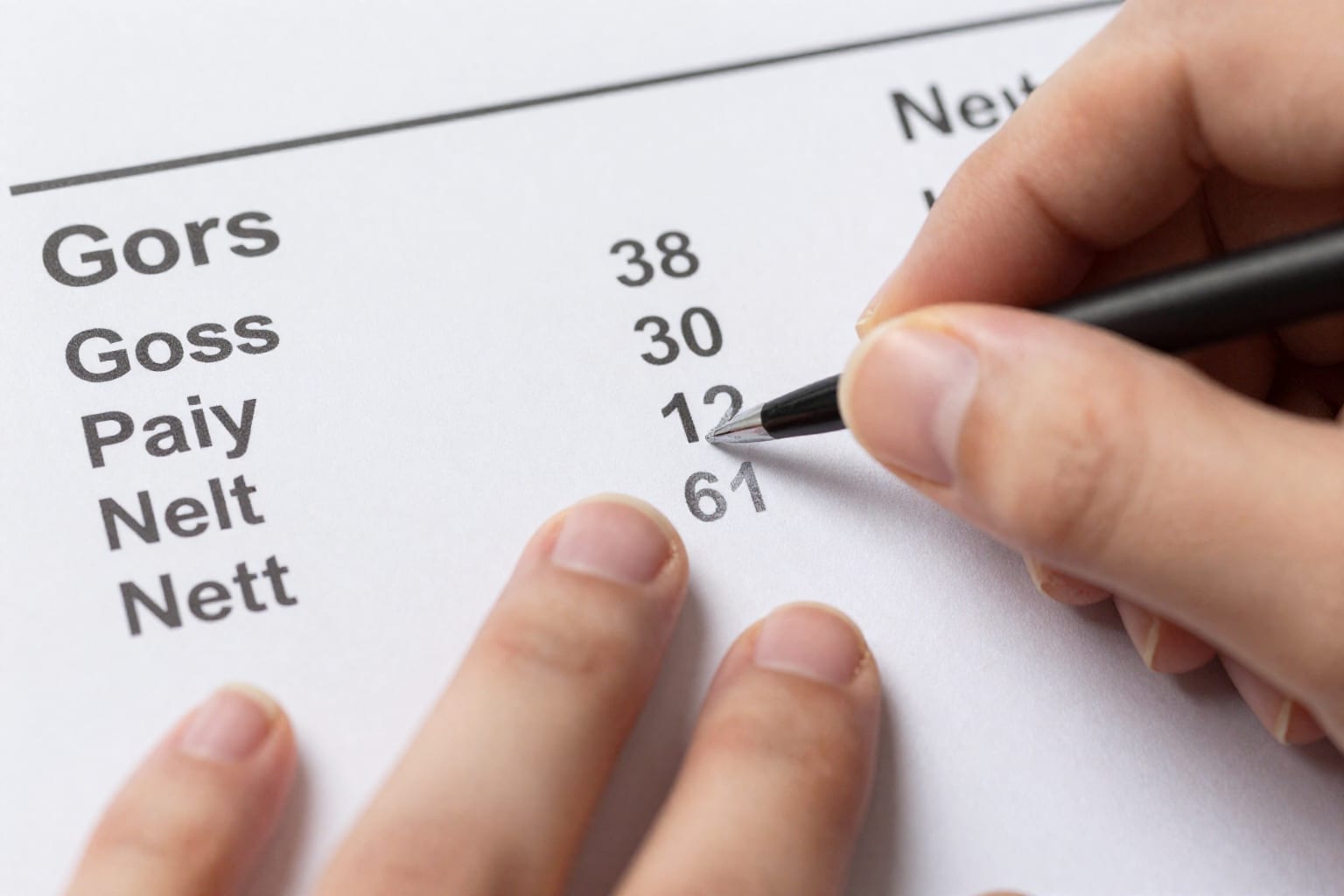
I remember staring at my first real paycheck like it was a puzzle I couldn’t solve. I’d worked 80 hours that month at $15 an hour, so I expected $1,200. The number on the check? $960. I went back and counted the hours again, then checked the stub, and felt a knot in my stomach. That missing $240 wasn’t a mistake—it was taxes. If you’re reading this because your first paycheck hit and your calculator doesn’t add up, you’re not alone. Let’s walk through why that 20% vanished and where it actually goes, so you can stop worrying and start planning.
The Shock of the First Paycheck: Why It’s Less Than You Expected
There’s a specific kind of disappointment that comes with opening your first pay stub. You multiply your hourly rate by the hours you worked, maybe add a little overtime, and you picture what you’ll buy. Then you see the actual deposit, and it’s like someone stole a piece of your weekend. I felt that sting at my first job bagging groceries. I’d convinced myself that $1,200 would cover a used laptop and a weekend trip. Instead, I got $960 and a lesson in reality.
The gap between gross pay and net pay is the tax wedge. For most first-time earners in the U.S., that wedge runs between 15% and 25%, depending on where you live and how you filled out your W-4. The 20% figure is a good rule of thumb if you earn around minimum wage or slightly above, have no dependents, and claim single status. It’s not a punishment—it’s how the country funds the services we all use, from roads to public schools to Medicare. But understanding it is the first step to feeling in control of your money.
When I finally asked a coworker about my stub, he laughed and said, “Welcome to adulting.” That wasn’t helpful. So I dug into the numbers myself, and what I found surprised me: the biggest chunk wasn’t income tax—it was Social Security and Medicare. That’s what I’ll break down next.
Breaking Down the 20%: What Taxes Are Actually Deducted
Let’s open an imaginary pay stub for a single person earning $15 per hour, working 80 hours every two weeks. Gross pay: $1,200. Net pay after taxes: roughly $960. Here’s where the missing $240 goes.
Federal Income Tax
This is the one most people think of first. For a single filer in 2026, the first $11,000 of annual income is taxed at 10%, the next bracket up to $44,725 is taxed at 12%, and so on. If you earn $15/hour full-time (about $31,200/year), your effective federal rate is around 10.5%—not 20%. That means about $126 of your $240 goes to federal income tax. The exact amount depends on your W-4 allowances. If you claimed “single” with no adjustments, your employer withholds at the standard rate. If you claimed extra allowances, less is taken out—but you might owe at tax time.
Social Security and Medicare (FICA)
Here’s the real surprise. Social Security takes 6.2% of your gross pay, and Medicare takes 1.45%. That’s 7.65% total, with no exceptions for low earners. On $1,200, that’s $91.80. Combined with federal income tax, you’re at $217.80, leaving only $22.20 for state taxes and other deductions. Many first-timers don’t realize that FICA is a flat tax—it doesn’t care about your bracket. And unlike income tax, you can’t adjust it with your W-4. The Social Security portion stops once you earn $160,200 (in 2026), but most first jobs won’t hit that cap.
State Income Tax
If you live in one of the 41 states with a state income tax, that’s another 3% to 6% on average. In my case, working in a state with a 4% flat tax, I lost another $48. That pushed my total deductions to around $265, or 22% of my gross pay. In states like Texas or Florida with no state income tax, you keep that slice. It’s worth checking your state’s rate—it’s often the difference between a 20% total and a 25% one.
So the 20% isn’t a single tax; it’s a stack of them. The biggest surprise for most people is that FICA takes nearly 8% off the top, no questions asked. That’s why your check feels lighter than you expected.
Beyond the Paycheck: Where Your Tax Dollars Go
I used to think taxes disappeared into a black hole. Then I looked up the federal budget breakdown and realized that $240 from my first paycheck was split across things I actually used. For example, the largest chunk—about 22% of federal spending—goes to Social Security, which pays retirees and disabled people. Another 14% goes to Medicare. That means nearly 36% of my tax dollars were funding programs I’d one day benefit from. It’s not exciting, but it’s real.
Defense and security take about 15% of the federal budget. Education, transportation, and veterans’ benefits each get smaller slices—around 3% to 5%. State taxes, meanwhile, fund local roads, public schools, police, and libraries. The pothole you drive over? That’s partly your money fixing it. The school down the street? Also your money. When I first realized that my $240 was paying for the bus I took to work and the emergency room I’d never used, I stopped resenting the deduction so much. It’s not a fee—it’s a collective investment.
Here’s a concrete example: in 2025, the U.S. government spent about $6.2 trillion. If you earned $31,200 and paid $3,120 in federal taxes (a 10% effective rate), your share of defense spending was roughly $468, your share of Social Security was about $686, and your share of interest on the national debt was around $310. Not every dollar goes to something you love, but every dollar goes to something someone relies on. That’s the trade-off of living in a society.
Common First-Paycheck Surprises and How to Check Your Pay Stub
Beyond taxes, your first paycheck might have other deductions you didn’t expect. Health insurance premiums, if you signed up for an employer plan, can run $50 to $200 per pay period. Retirement contributions, like a 401(k), are taken out pre-tax, which lowers your taxable income but also lowers your take-home pay. I once saw a coworker’s stub that had a $75 deduction for a parking pass he didn’t remember agreeing to. Always read the line items.
Here’s a quick checklist for decoding your pay stub:
- Gross pay: Total earnings before any deductions. Verify it matches your hours times rate.
- Federal income tax: Withheld based on your W-4. If it seems high, check your allowances.
- Social Security: 6.2% of gross, labeled OASDI on some stubs.
- Medicare: 1.45% of gross, often labeled HI (Hospital Insurance).
- State tax: Varies by state. If you live in a no-tax state, you won’t see this.
- Other deductions: Health insurance, retirement, parking, union dues. Confirm each one.
If something looks off, ask your HR or payroll department. Most errors are simple—wrong hours, wrong tax code, or a duplicate deduction. I once caught a $20 overcharge on my health insurance premium because I’d been double-enrolled. A five-minute email saved me $40 a month.
Frequently Asked Questions
Why does my first paycheck seem so much lower than my hourly rate multiplied by hours worked?
Because gross pay is what you earn, but net pay is what you keep after deductions. The main deductions are federal income tax, Social Security (6.2%), Medicare (1.45%), state income tax (if applicable), and any benefits like health insurance or retirement contributions. On average, these can total 20% to 30% of your gross pay.
Is the 20% tax rate the same for everyone on their first job?
No. Your effective tax rate depends on your total income, filing status (single, married, etc.), state of residence, and whether you’re an employee or independent contractor. Tax brackets are marginal—you only pay the higher rate on income above each threshold. A part-time student earning $10,000 may pay less than 10% overall; a full-time worker earning $40,000 may pay closer to 15%.
Can I get any of that tax money back at the end of the year?
Yes. If too much was withheld from your paychecks—for example, because you claimed fewer allowances than you should have—you’ll receive a refund when you file your tax return. Common reasons for over-withholding include being a dependent, having tax credits like the Earned Income Tax Credit, or simply having a low income. The refund is not a bonus; it’s your own money returned.
What is FICA and why are there two separate deductions for it?
FICA stands for the Federal Insurance Contributions Act. It funds two programs: Social Security (6.2% of your wages, up to an annual cap of $160,200 in 2026) and Medicare (1.45% of all wages, with no cap). They appear as separate line items because they go to different trust funds. Social Security supports retirees, disabled workers, and survivors; Medicare covers hospital insurance for people 65 and older.
Should I adjust my W-4 to have less tax taken out?
You can, but be careful. If you reduce withholding too much, you might owe money when you file your taxes, plus possible penalties. The IRS provides a Tax Withholding Estimator online to help you dial in the right amount. A good rule: aim for a small refund or a small balance due—that means you’re close to breaking even.
Your Practical Takeaway
Your first paycheck is a rite of passage, and the 20% tax bite is part of the deal. But now you know it’s not a mystery—it’s a mix of federal income tax, Social Security, Medicare, and maybe state taxes. The money funds roads, schools, healthcare, and safety nets that we all share. Next time you see that stub, run the numbers yourself. If anything looks off, speak up. And if you want to keep more of what you earn, consider adjusting your W-4, contributing to a Roth IRA, or moving to a no-tax state—but those are choices for another day. For now, just knowing where that 20% goes makes the sting a little easier to take.