How Externalities Justify Government Intervention in Markets
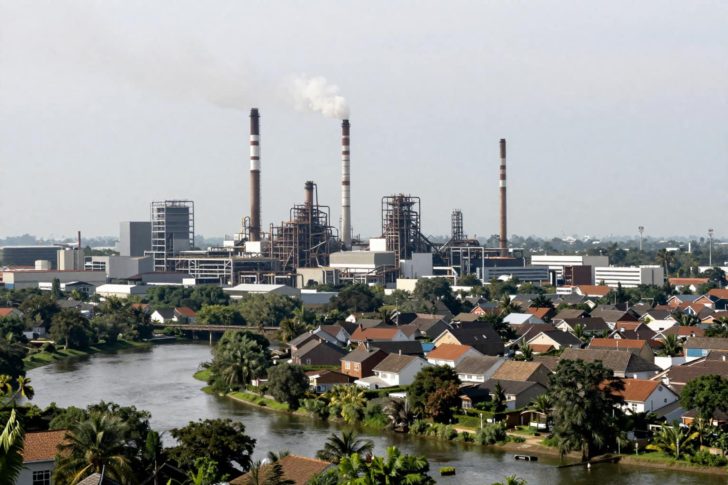
I spent five years working in environmental policy, watching regulatory debates that seemed to pit markets and government against each other. But one afternoon, I sat in a meeting where a factory operator defended his operation's air emissions this way: "We're complying with the law. We're making things people want to buy at prices they'll pay." He was right. The market was working exactly as designed. What wasn't working was the market's ability to see that his emissions were costing people in neighboring towns money—in medical bills, lost productivity, and early deaths. The market had no way to price that harm. So the government had to step in, not to break the market, but to tell the truth about what things really cost. That's the core of why externalities justify intervention: markets are brilliant at solving problems they can measure and monetize, but they're blind to costs nobody owns.
What Are Externalities and Why Markets Ignore Them
An externality is any cost or benefit that spills beyond the person who creates it. Your neighbor's loud music at midnight is a negative externality—you bear the cost of lost sleep without being compensated. A neighbor's garden full of pollinating flowers is a positive externality—you benefit from improved local bee populations without paying for it. In both cases, the price system doesn't capture what's really happening.
Markets work through prices. A price tells you everything you need to know to make a decision: if a shirt costs twenty dollars, you weigh that against what you get, and decide. Prices coordinate millions of independent choices into an orderly system. But prices only work when all the relevant costs and benefits are reflected in the transaction. Externalities break that assumption. When a coal plant emits sulfur dioxide, the company pays for coal and labor, but not for the lung disease its emissions cause. From the firm's perspective, the emissions are free. The price of electricity doesn't include the real cost, so too much of it gets produced, and society loses.
Negative Externalities: When Business Costs Become Public Burden
Negative externalities are everywhere. Air pollution from vehicles and factories imposes health costs on everyone downwind. A 2021 study found that air pollution costs the UK economy roughly £20 billion annually in healthcare spending, lost productivity, and premature deaths. Nobody asks the driver of a diesel truck whether they want to pay for the asthma they're inflicting on children in the neighborhood. The cost is external to their decision.
The tragedy is scale. One person dumping a little waste into a river might cause negligible harm. But when thousands do it, the cumulative effect poisons the water for everyone. Each individual actor rationally ignores their tiny contribution because it seems too small to matter. But collectively, the river becomes unusable. This is the classic pollution problem: individual rationality creates collective irrationality.
Climate change is the ultimate negative externality. A power company burns coal and sells electricity, internalizing the profits. The carbon dioxide enters the atmosphere and stays there for centuries, heating the planet for everyone. The company bears zero cost. From their books, coal is cheap energy. But society bears the cost in hurricanes, droughts, coastal flooding, and economic disruption. The price of electricity lies—it's much cheaper than what we actually pay for it, just in ways the market doesn't see.
Positive Externalities: The Underinvestment Trap
Negative externalities cause overproduction of harmful goods. Positive externalities cause underproduction of beneficial ones. Consider education. A person who learns to read and write benefits themselves, but society benefits too—they become a more productive worker, less likely to commit crime, more likely to participate in democracy. A parent who educates their child is subsidizing society's future, but they don't get paid back for it.
Because individuals can't capture the full benefit of their education, they underinvest in it. A poor family might send only some children to school to save money, even though society would gain enormously if all of them completed high school. The market price of education—tuition—reflects only private benefit, not social benefit. So from the market's perspective, too little education is bought.
The same holds for basic research. A pharmaceutical company that invests billions in discovering an antibiotic has to charge enough to cover that cost. But the benefits of antibiotics—prevented infections, saved lives, avoided infections that create resistant bacteria—spill far beyond what any single company can capture. So companies underinvest in antibiotics compared to what society would want. This is why the U.S. government subsidizes vaccine research: the market alone won't produce what the nation needs.
Why Pure Markets Cannot Correct Externalities
Some economists argue that markets can solve externalities without government intervention. In theory, if property rights were perfectly defined and transaction costs were zero, parties could negotiate. If I own the river and you want to pollute it, I'd charge you for the damage. You'd either pay me or find a cleaner production method. Both of us would be better off than in a world where pollution is free.
This is sometimes called the Coase theorem—the idea that efficient outcomes emerge from bargaining if transaction costs are low enough. And in some small cases, it works. If your factory's smoke damages my business next door, we might negotiate. But this breaks down at scale. Who owns the air above a city? How would ten million people negotiate individually with a power plant? The transaction costs explode. Millions of people with asthma would each have to sue each other and the plant. The legal system would collapse under the volume.
Moreover, property rights are impossible to define for some goods. Nobody can own the climate or the ozone layer. We can't privatize the atmosphere. So the Coasian bargaining solution simply doesn't apply. Government intervention isn't optional in these cases—it's the only mechanism available to aggregate the harm millions of people face.
Government Tools: From Carbon Pricing to Regulation
Once you accept that markets can't solve externalities alone, the question becomes: what should government do? The main approaches fall into two categories: prices and rules. Market-based tools like carbon taxes or cap-and-trade systems set a price on the externality. Regulatory approaches set a standard and require compliance.
The European Union's Emissions Trading System (ETS) is the world's largest carbon market. Launched in 2005, it caps total emissions from major industrial facilities and gives companies tradeable allowances to emit. If you emit less than your allowance, you can sell the surplus. If you need to emit more, you buy allowances. Since 2005, emissions from covered sectors have fallen roughly 35 percent, even as GDP grew. Companies had a price signal: cut emissions or pay. Some did both—improved efficiency and paid for remaining emissions. The price started low but has risen to around 80 euros per ton of CO2 in recent years, making clean energy increasingly competitive.
Carbon taxes work similarly but more directly: government sets the tax per ton of emissions, and polluters choose whether to pay or change behavior. Sweden introduced a carbon tax in 1991 at roughly $50 per ton (in today's money). Since then, CO2 emissions have fallen 28 percent while the economy grew 97 percent. Companies invested in renewables, efficiency, and switching fuels—all because the tax made the true cost visible.
Regulatory mandates work differently. The U.S. Clean Air Act doesn't price pollution; it sets standards. Car manufacturers must meet fuel-economy targets. Power plants must install pollution controls. Factories can't exceed emission limits. No pricing involved—just rules. This approach works but often costs more per ton of pollution reduced because it eliminates the efficiency gains from letting polluters choose their cheapest abatement path. A company that finds a super-cheap way to cut emissions still has to comply with the mandate, which might force them to use a more expensive method.
The Trade-Offs and Unintended Consequences Nobody Mentions
Here's the uncomfortable part of the externality story that most textbooks gloss over: government intervention creates its own problems. A carbon tax meant to reduce emissions might burden low-income households disproportionately if they can't afford to switch to electric vehicles or retrofitted homes. Cap-and-trade systems can concentrate pollution in poor neighborhoods if wealthy regions buy all the permits. Renewable energy subsidies sometimes prop up inefficient technologies and distort markets toward particular solutions instead of letting competition find the best path.
In my own experience, I watched a city government mandate that all new buildings include rooftop solar. Sounds good—more clean energy. But in practice, it made housing more expensive and created a backdoor subsidy to solar installers. Some buildings genuinely benefited; others saw minimal solar potential and paid high costs for panels that barely worked. A carbon tax or a simpler clean-energy credit would have let developers choose the most cost-effective path for each site. The mandate felt virtuous but was often wasteful.
The broader point: intervention that corrects one inefficiency can create another. That's not an argument against intervention—externalities are real failures that markets can't fix. But it's a reason to choose tools carefully and monitor results. A badly designed carbon tax that crushes industry does more harm than the externality it was meant to fix. A regulation that sounds perfect but creates perverse incentives (like solar mandates that ignore site conditions) fails its own mission.
Finding the Right Level of Intervention
The best approach combines market mechanisms with light-touch regulation. Set a price on the externality—carbon tax, pollution tax, congestion pricing—so decision-makers see the true cost. Markets then find the cheapest way to respond. Complement this with minimum standards: yes, you can pollute if you pay the tax, but not so much that certain thresholds are violated. Air quality standards exist for good reason. No community should be unlivable regardless of how much tax is paid.
This hybrid approach respects both what markets do well (find efficient solutions) and what they can't do (internalize costs that affect millions). The market can't price the climate, so government sets the carbon tax. But the market absolutely can decide whether the best path to decarbonization is renewables, nuclear, efficiency, or some combination. Let price signals guide innovation; regulation sets boundaries.
The core insight about externalities and government intervention is this: markets aren't magic, and neither is government. Markets fail when they can't see costs. Government fails when it's inflexible or ignores unintended consequences. The solution is intervention that makes the market honest about what things really cost, then steps back and lets competition do the rest. Not a choose-one-or-the-other decision, but a thoughtful blend that fixes the market's blind spot without replacing the market's problem-solving power.